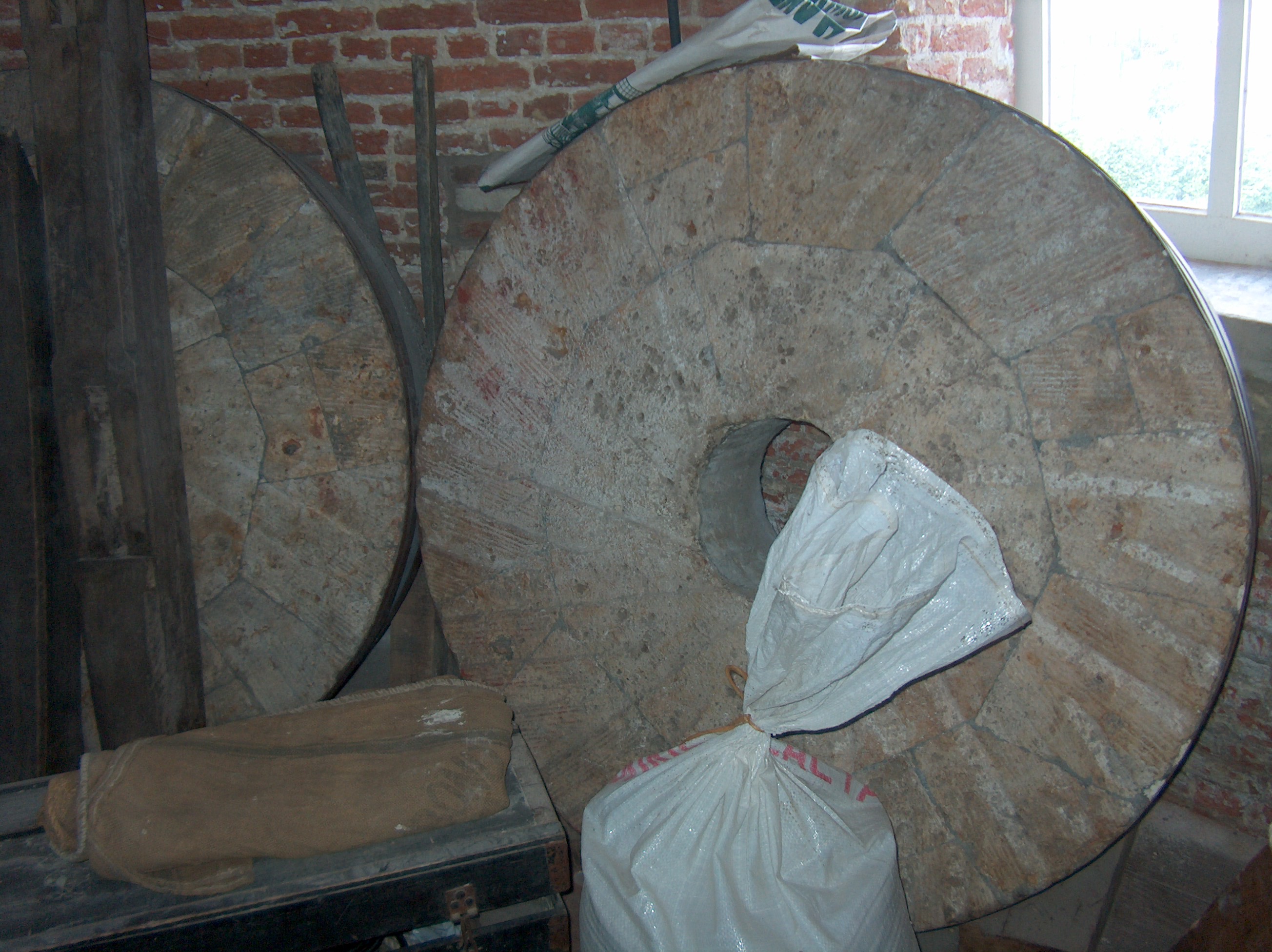
In pre-industrial central Italy, grain milling was not a peripheral activity. It was the conversion step that stood between field and table — the process by which a community transformed its primary agricultural output into food. Understanding how that step was organized, who controlled it, and what terms governed access to it illuminates a great deal about rural social structure in medieval and early modern Italy.
The Miller's Position
The miller occupied a structural position in rural communities that had no precise equivalent. He was neither peasant farmer nor urban artisan, neither landlord nor serf. He held a capital asset — the mill — that the entire community required, and he had legal access to a water resource — the stream — that was otherwise not privately owned. This combination of practical necessity and institutional privilege gave the miller a social standing that was simultaneously dependent and powerful.
Documentary evidence from Umbrian and Tuscan communes in the 13th and 14th centuries paints a consistent picture. Millers appear regularly in legal records — as witnesses to documents, as parties in disputes, as holders of credit. The mill itself often served as collateral in lending arrangements, and millers frequently lent grain or money to farmers during the pre-harvest period, receiving repayment in kind after the harvest was milled.
A 1312 statute from Gubbio specified that the miller could retain one-sixteenth of each grain delivery as his fee — the molitura. The statute also prohibited millers from adulterating flour with bran or foreign material, and established a system of periodic inspections by commune-appointed assessors. The penalties for fraud were substantial: fines, public shaming, and in repeat cases, loss of the milling concession.
The Molitura: Fee Structures and Disputes
The molitura — the miller's portion — was the standard mechanism by which mill operators were compensated. Rather than a fixed cash fee, the miller retained a fraction of the milled output: typically one-twelfth to one-sixteenth of the grain delivered, varying by region, period, and the terms of the individual milling contract.
This system had important consequences for how grain moved through the community. It aligned the miller's economic interest with throughput — more grain milled meant more retained — which incentivized efficient operation but also created opportunities for manipulation. The miller controlled both the measurement and the grinding, and the records from Italian communal courts contain numerous cases in which farmers accused millers of using inaccurate measures or retaining more than the agreed portion.
Communal Regulation
The response of Italian communes to these structural tensions was regulation. Municipal statutes across central Italy from the 13th century onward include detailed provisions governing mill operation: the allowable molitura rate, the obligation to serve customers in order of arrival, the prohibition on giving preferential treatment to large landowners over smallholders, and the requirement to maintain the mill in operational condition throughout the grain-processing season.
Enforcement was the harder problem. Mill inspections required technical expertise — the assessor needed to know whether a millstone was properly dressed, whether the sluice gates were operating correctly, whether the weight measures were accurate. Some communes hired permanent hydraulic assessors; others relied on rotation among experienced millers from neighboring villages, which created obvious conflicts of interest.
The Seasonal Calendar of Milling

The hydraulic wheel mechanism that transferred stream energy to the grinding stones. Maintaining this system in good repair required specialized knowledge passed through families across generations. (Wikimedia Commons, CC)
Milling was not evenly distributed across the year. Two periods of peak demand punctuated the annual cycle: the autumn harvest, when newly threshed wheat needed to be milled before it could be stored or consumed as bread, and the late winter, when stored grain was processed in preparation for the lean months before the next harvest.
These demand peaks coincided badly with the stream hydrology in central Italy. Autumn was the driest period for most Apennine streams, which meant that the mills were most in demand precisely when water was scarcest. A well-maintained fosso and gorgo could buffer this mismatch somewhat, but a prolonged dry autumn could reduce mill output significantly and create a backlog of unprocessed grain that lasted well into winter.
Night Milling
To address capacity constraints during peak periods, some mills operated at night — an arrangement documented in contracts and communal regulations from several central Italian regions. Night milling required that the miller, or more often his apprentice or a family member, remain at the mill to monitor the operation, adjust the sluice as needed, and prevent grain theft.
The risks were real. Mill fires — caused by over-heating from friction when grain supply ran low and the millstones ground against each other — were more likely when supervision was minimal. Several accounts from communal court records describe fires attributed to unattended nighttime operation, and some statutes required that a lamp remain lit in the millroom at all times as both a practical measure and an indication that someone was present.
Mills, Bread, and Social Stratification
Access to milling was not uniform across the social spectrum. Larger landowners with significant grain surpluses had negotiating leverage that smallholders lacked — they could offer the miller larger and more predictable work volumes, and they could afford to wait longer in line during peak periods because they held grain reserves. The smallholder who needed immediate processing of a modest harvest was in a weaker position on both counts.
Some Italian communes attempted to address this asymmetry directly. Regulations in Siena and Perugia specified that the miller must serve customers in strict arrival order during the harvest season, with no preference for larger lots. The practical enforceability of this rule was limited, but its existence indicates that communal authorities recognized and sought to constrain the miller's capacity to favor powerful clients.
The Mill as Credit Hub
In many central Italian villages, the mill was also an informal credit mechanism. The miller, who accumulated grain as his molitura payment throughout the season, was often the party most capable of advancing food to a family that had exhausted its reserves before the next harvest. These loans — typically documented as grain debts to be repaid at the following harvest — appear in notarial records from Umbria, Lazio, and Tuscany with sufficient frequency to suggest that they were a standard feature of rural economic life rather than an exception.
The relationship between the miller-as-creditor and the debtor-farmers created dependencies that extended well beyond the milling transaction itself. In some cases, documented from the 14th and 15th centuries, miller families accumulated significant landholdings by accepting land as settlement for unrepaid grain debts — a gradual concentration of rural property that operated outside the more visible mechanisms of feudal tenure.
The Decline of the Village Mill
The trajectory of the central Italian village mill from the mid-19th century onward is well documented and broadly consistent across the region. Steam-powered roller mills, concentrated in larger towns and cities and connected to rural communities by improving road networks, could undersell the village miller on both price and turnaround time. The transition was not instantaneous — in remote mountain communities, local mills continued to operate well into the 20th century for want of practical alternatives — but the direction was clear from the 1880s onward.
By 1950, most of the small water-powered mills that had structured rural life across central Italy for centuries were already idle. The millstones were removed or left in place; the wooden components rotted or were reused; the channels silted or were diverted for other purposes. The buildings themselves survived in varying states, depending on local building material quality and the fortunes of subsequent land ownership.
What remains — in archives, in landscape features, in surviving structures — is a record of an infrastructure that organized a fundamental aspect of daily life across the Italian countryside for roughly eight hundred years. That record is incomplete and unevenly preserved, but sufficient to reconstruct the basic outlines of how grain milling worked, who controlled it, and what it meant to the communities it served.